You So Black…

You So Black…
On the Long History of Anti-Black Humor
M. Abduh
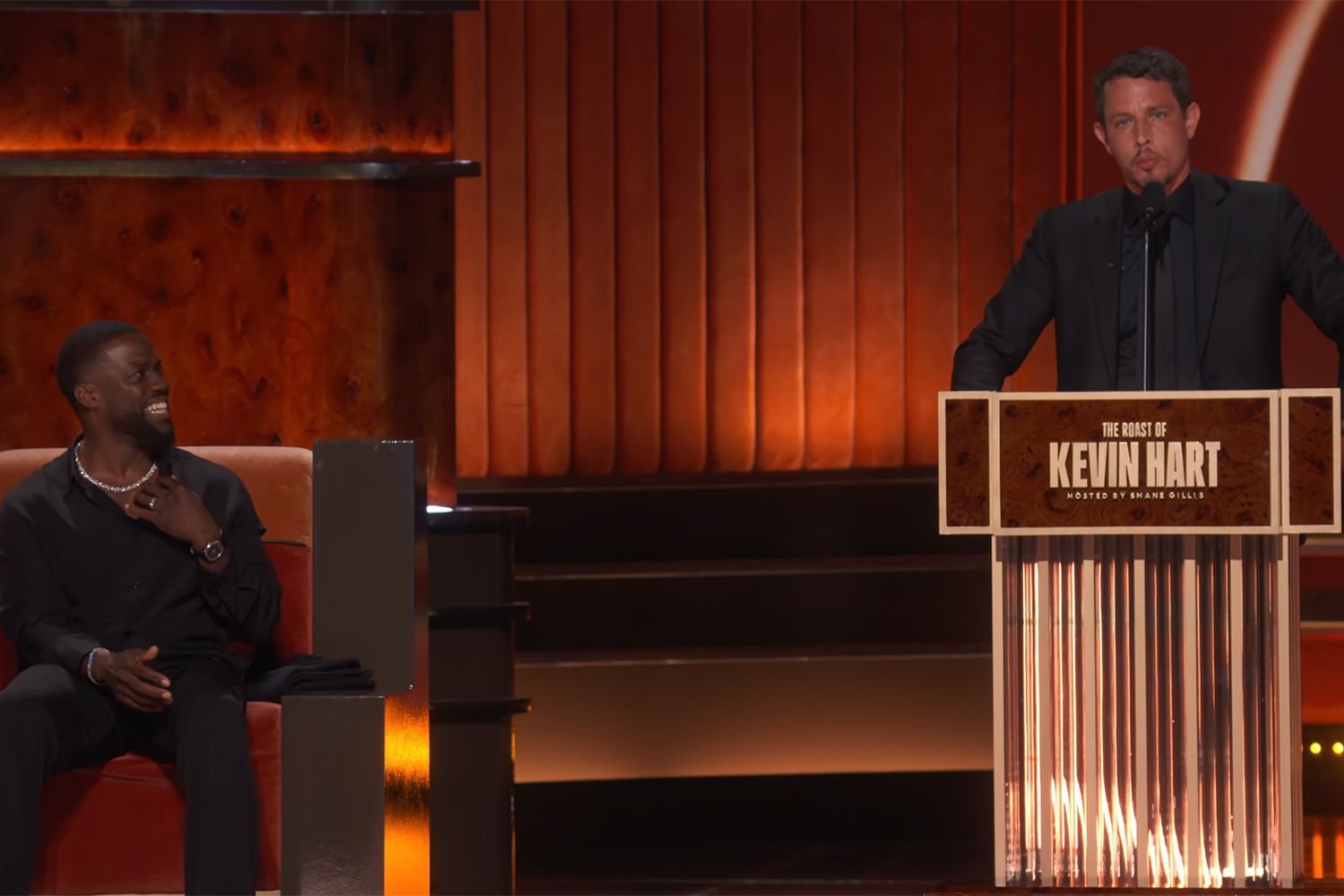
We used to snap on each other in the lunchroom. “You so black,” I said to my friend Jay, “when God made you, He said, ‘Let there be light.’” The whole table erupted. Jay came right back: “Your momma so big & black, she thinks the Aunt Jemima box is a mirror.” He got me & my mother. Those “you so black” jokes hit hardest, got the biggest laughs. Watching the Kevin Hart roast on Netflix reminded me of the lunchroom & the ugly origins of such humor.

     Hart’s lineup of white writers & comedians joked about hanging the five-foot-five roastee from a bonsai tree, about his ancestors coming to America on a slave ship in a bottle, about George Floyd “looking up at us, laughing so hard he can’t breathe.” One of them hit comedian Sheryl Underwood with a “you so black” joke, saying she received a daytime Emmy award because they couldn’t see her at night. We might have told that one in the lunchroom. That’s because these jokes come from the same history, from the same lie. A lie that says Blackness is lesser, that darker is uglier.

      Novelist Toni Morrison spoke to this while recounting what inspired her to write her novel The Bluest Eye. As children, her & a friend were walking home & talking about God. Morrison’s friend said she did not believe in Him. When Morrison asked her why, she said because “I have been asking God for blue eyes for two years, & He never gave me any.” Morrison remembered turning around & looking at her. “She was very very black, & she was very very very beautiful.” Morrison went on to say that this kind of racism hurts: “This is not lynchings & murders & drownings. This is interior pain.” Sometimes that pain appears in sorrow. Sometimes in laughter. But the wound is one. Anyone mocked for dark skin or “nappy” hair knows what Morrison means. Still, defenders of these jokes often respond the same way. They insist the problem is not the joke but those offended by it. Philosopher Judith Butler would disagree. As Claudia Rankine notes, Butler argues that words hurt because human beings are “addressable.” We cannot help being affected by what others say. The same openness that lets us receive love also leaves us vulnerable to injury.    

     Yet after receiving criticism for the roast’s racist jokes, Hart posted a video saying the comics “got the assignment.” How did insulting Blackness (or mocking slavery or lynching) become part of the assignment? More importantly, who assigned it? Did it come down on stone tablets from the mountain? Some, like Hart, believe that comedians should be able to say anything in the name of humor, that their jokes are as unquestionable as Scripture.

   This ignores centuries of dehumanizing art, literature, & entertainment. It means blackface, minstrelsy, & Black caricatures in advertisements, cartoons, film, & television were part of the assignment. It means those who mailed postcards of charred Black bodies hanging from trees, sometimes joking, “wish you made it to the barbecue last night,” got the assignment, too. Maybe this is what some people mean when they long for a time when society wasn’t so sensitive.
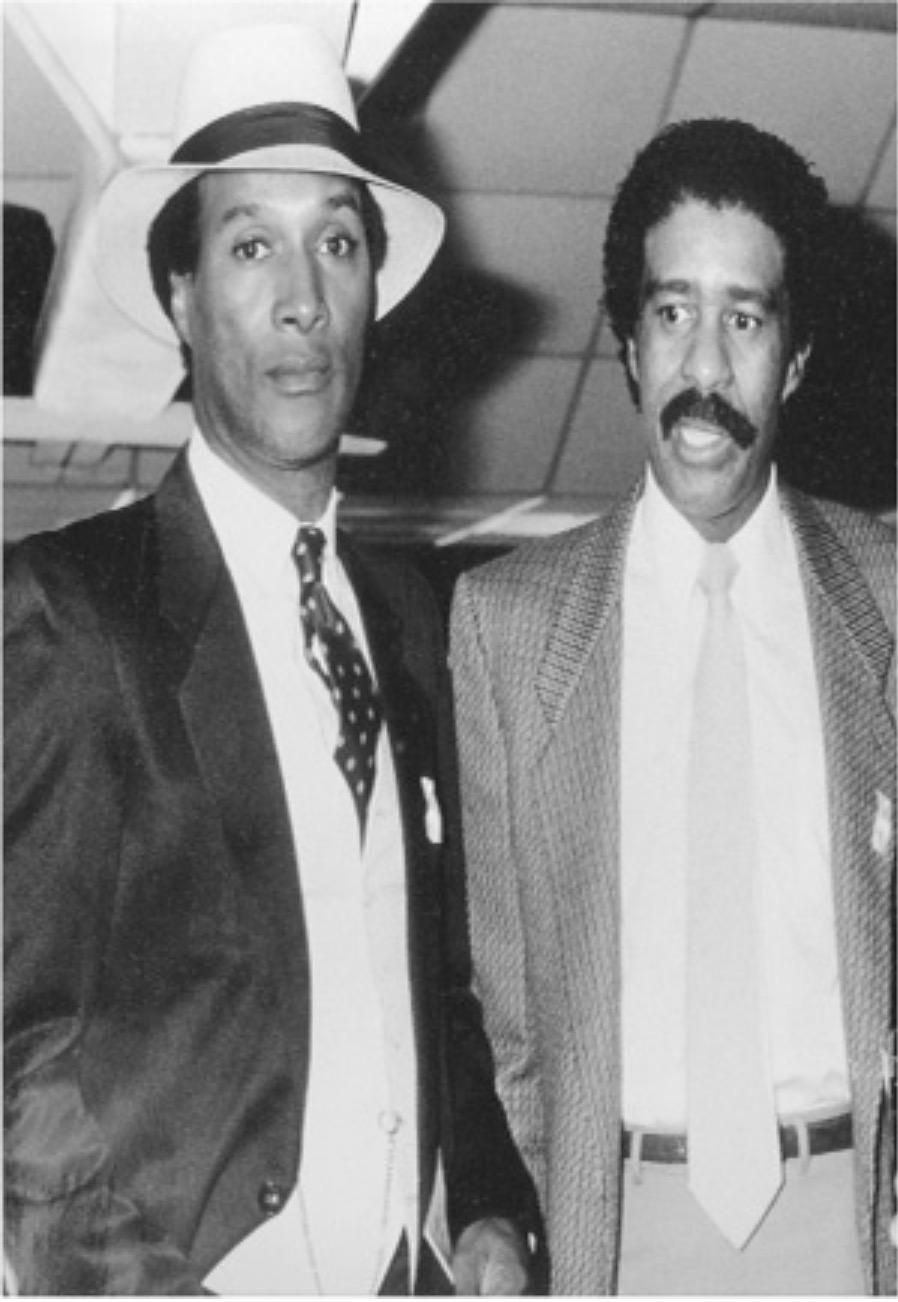
Too Much His: Richard Pryor, Paul Mooney, & the Question of Authorship

Too Much His: Richard Pryor, Paul Mooney, & the Question of Authorship
By M. Abduh
29 December 2025

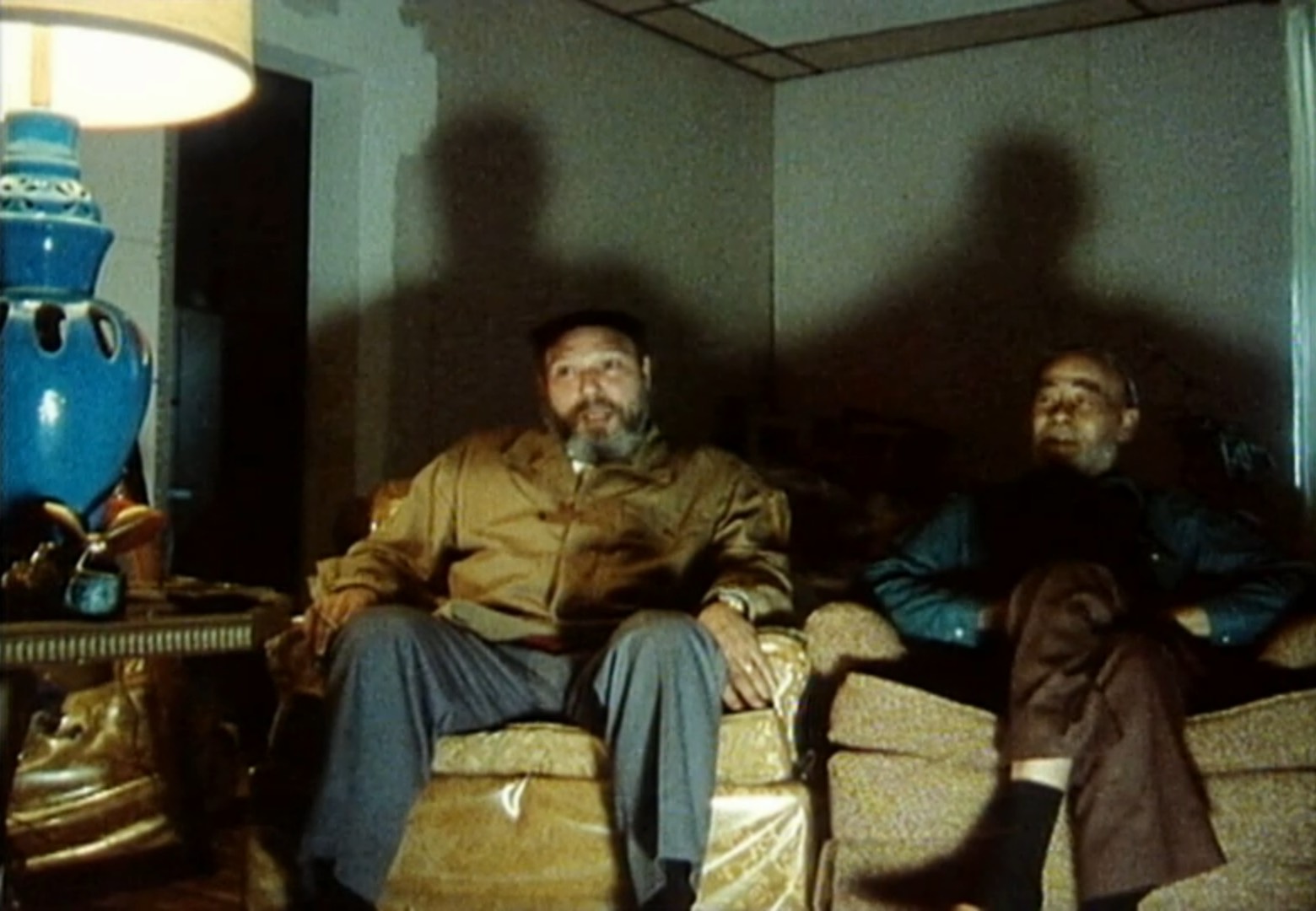
Paul Mooney deserves credit for many things. He wrote for The Richard Pryor Show on NBC and served as showrunner. He wrote for Pryor’s 1975 appearance on Saturday Night Live, at Pryor’s insistence, contributing the famous job interview sketch with Chevy Chase. He co-wrote two episodes of Sanford and Son & collaborated on Pryor’s film Jo Jo Dancer, Your Life Is Calling. What he did not write was Richard Pryor’s stand-up.

Pryor was writing & performing his stand-up long before he met Mooney. Biographer Scott Saul mentioned that in 1965, Pryor was “writing new material constantly” for near-weekly appearances on Merv Griffin. By the time Pryor & Mooney worked together, his voice was already evolving. In his memoir Black Is the New White, Mooney recalled that Pryor shed his Cosby-like act alone in Berkeley, California while listening to Marvin Gaye’s “What’s Going On” on repeat & reading Malcolm X. He described watching Pryor’s new direction as an audience member, marveling as he moved from simple set-ups & punchlines to storytelling, inhabiting characters drawn from his childhood in a brothel in Peoria, Illinois. 

A track on the album Is It Something I Said? titled “Just Us” is telling. Pryor credited Mooney as a co-writer, even though he only gave him one line: “You go down [to the courthouse] looking for justice. That’s what you find, just us.” Mooney himself said he did not write the routine. He said the line in passing, & Pryor used it, honest enough to credit him for it. That is the only place Mooney’s name appears.

The “just us/justice” pun predates Mooney. It circulated in Black Arts–era writing & appears on the 1972 Last Poets record “E Pluribus Unum”: “They also represent the Just-Us / which you & I know is blind.” Poet Claudia Rankine would later use Pryor’s version as the epigraph to her 2021 collection Just Us. This is how language gets passed around & passed down.

Having an ear for a line isn’t unique to Pryor. In Gabriel García Márquez’s short story “Sleeping Beauty and the Airplane,” the narrator asks an airport clerk if she believes in love at first sight. “Of course,” she says. “The other kinds are impossible.” It later emerged that García Márquez had heard that line years earlier from a woman named Silvana de Faria at Charles de Gaulle Airport in Paris. After his death, she recalled the exchange:

“Then he asked why I was living in Paris. I said, ‘We Latin Americans can only live in France when we fall in love.’

‘In love with France?’

I said, ‘No, love at first sight. I believe that’s the only kind of love.’

This is what he writes in the story! He sucked my words. When I read that, I felt goose bumps. You are not original. You are like all bloody writers. You are a vampire.”

I suppose this makes her García Márquez’s writer.

Mike Epps said it plainly: “Regular people write for me all the time, that don’t even know they’re writing for me. Motherfucker sitting at the bar & say some shit. I say, ‘I got to have that. I’m taking that.'”

Mooney described Pryor as a master of improvisation. Watching him work on stage, he said, was like seeing a high-wire act without a net:

When Richard gets up onstage at Maverick’s, he never knows what he’s going to say. The words just spill out. I’ve done enough improv to know how tough it is to do what Richard’s doing. Just a man and a microphone, saying whatever’s on his mind at that moment, developing it on the spot into a routine. It’s the purest kind of improvisation, and Richard proves himself brilliant at it. Every night is different.

This is not someone reciting another person’s jokes.

Others who watched Pryor work describe a similar process. Comic George Wallace witnessed him create Live on the Sunset Strip in small comedy clubs over several weeks. According to Wallace, Pryor went onstage with nothing, with “less than zero,” riffing for an hour each night, struggling to find his way. Wallace saw the bits sharpen week by week until, “Holy shit!,” he said, Pryor finally gathered the material that would become one of his greatest performances.

No artist works in a silo. Comedians like Pryor, Mooney, Murphy, Chappelle, and others collaborate with peers. They punch up jokes, offer ideas, throw out lines. For example, people often claim that Keenen Ivory Wayans co-wrote Eddie Murphy’s Raw. The credits tell a different story:

Written by Eddie Murphy
Opening sketch: Eddie Murphy & Keenen Ivory Wayans

As for Pryor & Mooney’s collaboration on sketches & scripts, Mooney said they hired a stenographer and met at Richard’s house. They tossed around situations, one-liners, trying to crack each other up. The stenographer couldn’t keep up. If she laughed, they knew they had something.

Those who were there, including Pryor’s bodyguard Rashon Khan, have rejected the claim that Mooney was Pryor’s writer. Khan stated,

The stand up performer writes his own material… Paul Mooney was not Richard’s writer. Paul Mooney like anybody that’s a friend would see what you was doing, & they would give you three or four or five other alternatives… It still was up to you. You created the base… They wasn’t writing for him. It wasn’t notes written down.

Pryor was a prolific writer for himself & others. He wrote for the Flip Wilson Show, Sanford and Son, The Lily Tomlin Show, &, perhaps most famously, he co-wrote the classic film Blazing Saddles with Mel Brooks. Mooney said, “Mel Brooks knows his comedy. He’s smart enough to know who is the funniest man on the planet. He hires Richard.”

Mooney himself said that “Richard is never worried about anyone raiding his material. It’s too much his.” 

No one else’s. 

Paul Mooney was Richard Pryor’s friend, sounding board, & collaborator. He was not his writer.

Writers on Fighters: Gwendolyn Brooks’s “Black Steel”

Writers on Fighters: Gwendolyn Brooks’s “Black Steel”
M. Abduh
27 November 2025

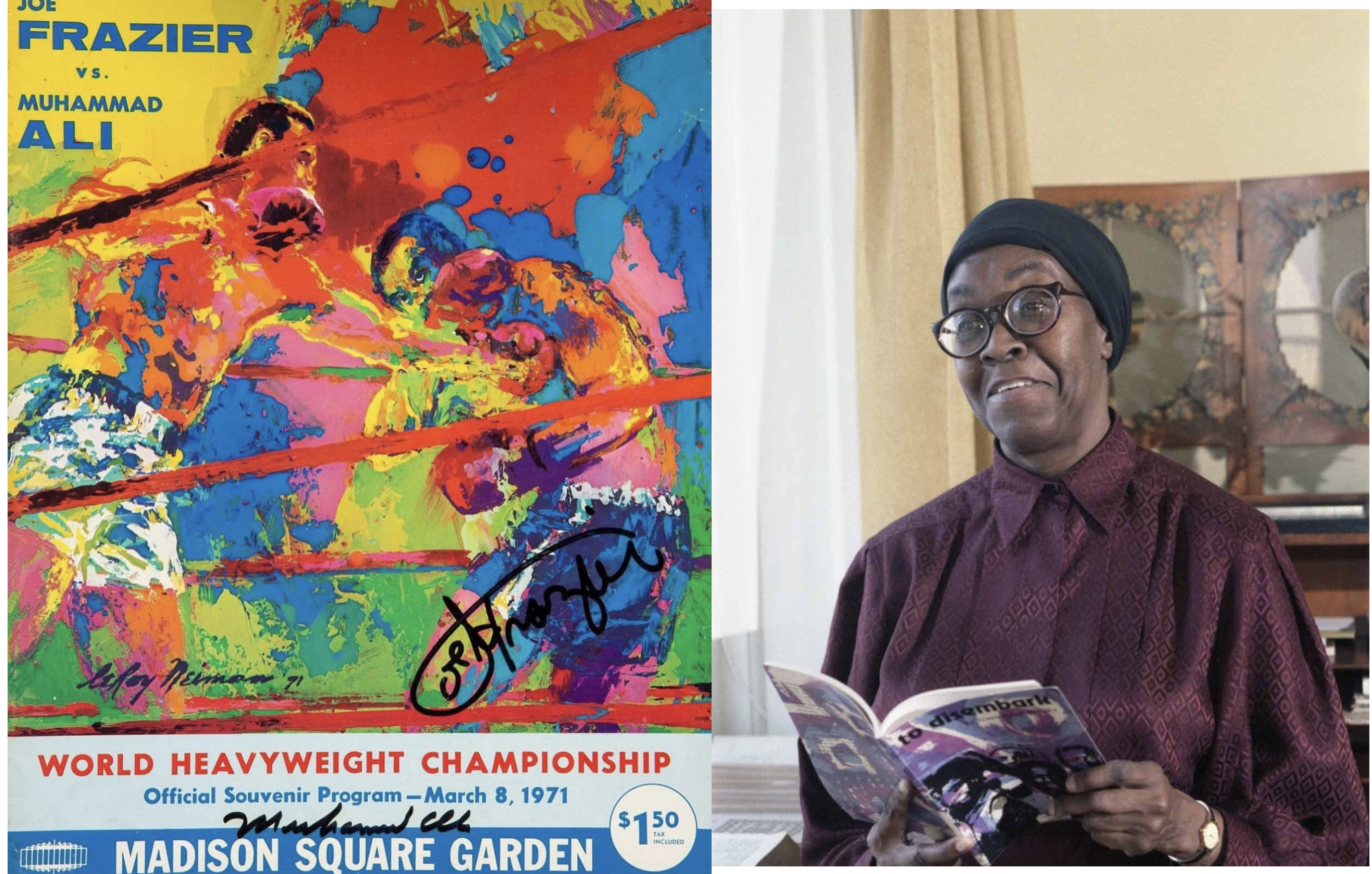
On March 8, 1971 in Madison Square Garden, Muhammad Ali & Joe Frazier met in what was dubbed “The Fight of the Century.” While Ali had been exiled from boxing for refusing the draft during the Vietnam War, Frazier won his vacated title. Ali insisted that he had not lost the crown in the ring, so  he remained the champion. Frazier welcomed the challenge & even lobbied for Ali to get a license. 

Upon Ali’s return to the boxing, this fight was the most highly anticipated event in sports. The first time in history two undefeated heavyweight champions would meet in the ring. It was the beginning of a bitter rivalry. The start of  an epic trilogy. 

Before the opening bell, the drama & the poetry of the blood feud appeared in the poem “Black Steel” by Gwendolyn Brooks, commissioned for the fight and printed in the fifty-two page official on-site program. 

In it, Brooks employs metaphor, alliteration, whatnot to detail this “roaring thing,” this “Calculated Blaze.” But ultimately she reminds the combatants, reminds us all, that black love remains unbeaten:

But
when the last bell’s business dulls away,
know that the echo’s message is black love.
Pick up the pieces of the Brotherhood.
Let
black love survive the Calculated Blaze.
Let
black love survive the Challenge and the Blood.

Black love somehow survived Madison Square Garden, Fort Pillow, Birmingham, Watts, Kinshasa, Manila. The last bell still dulling away. Still picking up the pieces.

Writers on Fighters: James Baldwin on Patterson vs. Liston

Writers on Fighters: James Baldwin on Patterson vs. Liston
M. Abduh
26 November 2025

“The Fight: Patterson vs. Liston” was originally published in the February 1963 issue of Nugget Magazine & later collected in The Cross of Redemption: Uncollected Writings.

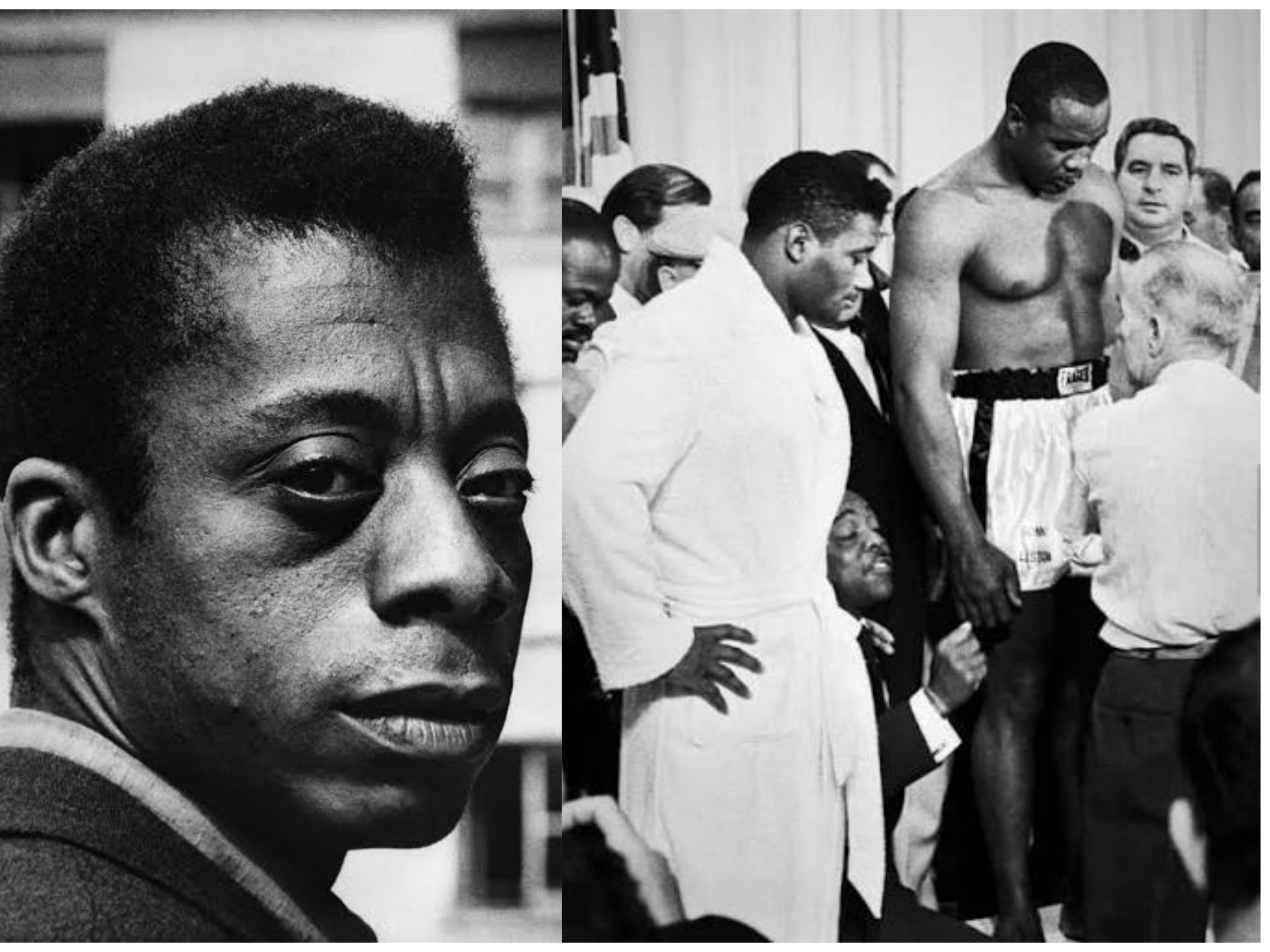
James Baldwin is not known for writing about boxing. Even in his profile of the Patterson-Liston fight, he begins by admitting that he knew little about the “Sweet Science” or the “Cruel Profession”: “I am not an aficionado of the ring,” he said, “and haven’t been since Joe Louis lost his crown.” Still, he masterfully profiled the fighters & their camps, captured the days leading up to the event, & contextualized the cultural significance of the contest. The fight itself, though, gets barely a paragraph. The profile ends—after Liston demolishes Patterson in two minutes—with Baldwin having a drink with a writer who knew plenty about the sweet science: “We started walking through the crowds and A. J. Liebling, behind us, tapped me on the shoulder and we went off to a bar, to mourn the very possible death of boxing, and to have a drink, with love, for Floyd.”

Sixty-three years later, Liston & Patterson are gone. Baldwin, too. Boxing is still dying. We are still mourning.

The Last Supper

The Last Supper
M. Abduh
6 November 2025

Before I went plant-based & became one of les misérables, people would tell me, “Cut out red meat. Eat more fish. It’s healthier.” Then I read that the actor Jeremy Piven had been hospitalized for mercury poisoning. From eating fish. I thought, What was he eating, thermometers? Mercury or not, I never liked fish. But I loved cheesesteaks. Turkey hoagies. Five Guys burgers. Buffalo wings. To be even more candid, I didn’t much like vegans either. They always seemed so self-righteous. 

I was seeing one once. Hand her a menu, & she became the most sanctified diner in the eatery. She thought avoiding 40% of the food chain somehow made her deep. One night at dinner, I ordered a steak—well done, I might add—& she got to arguing with me about my selection. She peered over her glasses like my second-grade teacher, Ms. Cherry, & said, “You do know how harmful animal fat is, don’t you?” 

“Well, I do now. But I’m a little confused.”

“About?” she said.

“Well, if cow fat is harmful, & they eat grass all day, what does that say about leafy greens?”

I laughed. She didn’t. 

She stared at the menu, then ordered the same thing she always did: a salad with “vegan” raspberry vinaigrette. Why must vegans put “vegan” in front of everything? Raspberry vinaigrette is raspberries, oil, & vinegar. No animals were harmed in the making of the dressing. I almost  expected her to ask for a bottle of vegan Perrier & a vegan fruit salad for dessert.

Fifteen minutes later, the waitress came back & said they were out of lettuce. Out of lettuce. They had to send out for it. I figured  no one had ordered any in weeks.

Finally, when the food arrived, I waited for her to take a bite. “I thought you didn’t eat anything that came from animals?”  

“I don’t,” she said. 

“What do you think they fertilize that lettuce with?” 

It was our last supper.

Writers on Fighters: August Wilson & Charley Burley

Writers on Fighters: August Wilson & Charley Burley
M. Abduh
3 November 2025

Many call Charley Burley the “uncrowned champion.” He was a dangerous fighter. So dangerous that several great champions (including Marcel Cerdan & the greatest pound-for-pound fighter in history, Sugar Ray Robinson) refused to face him. He belonged to a group of fighters known as “Black Murderers’ Row,” a name born of injustice & fear. They were Black men denied opportunity, men who beat opponents to death.

Burley fought from welterweight to middleweight, but he was known for knocking out heavyweights. As respected as he was in the boxing world, he never got a title shot. He never saw the big purses. So, he returned to his hometown of Pittsburgh, Pennsylvania, & worked as a garbage man.

At the time, Burley lived across the street from a boy who would become one of America’s greatest playwrights, August Wilson. Wilson went on to write an epic cycle of ten plays, each capturing a decade in the life of Black America during the twentieth century. Perhaps his most famous is Fences, set in 1957 & featuring the central character Troy Maxson. Few know that Troy Maxson was based on Charley Burley.

Wilson’s father, a European baker & a notorious drunk, was rarely around, & Burley became something of a surrogate father to him. Wilson said of Burley, “They call him the uncrowned champion. He was in Bert Sugar’s 100 Best Boxers of All Time. That’s a lot of boxers we’re talking about there. And he lived directly across the street from me, and since I grew up without a father, he was really a very strong male image for me in my life. And the fact that he went and knocked people out only added to the intrigue, the mystique of the male being conqueror.”

Professor Laurence Glasco summed up the relationship, saying that Burley was Wilson’s first idea of what it meant to be a Black man. He admired Burley because “when he walked down the street, guys looked at him with pride and awe.”

Just as Burley was denied a title shot, especially by white fighters, Troy was denied the chance to play in the major leagues. Despite their greatness, racism kept both men from rank & riches. Two men from Pittsburgh’s Hill District, both working the rubbish instead of reaching glory in their games.

Wilson captured that contradiction in Fences, the glory & the frustration of being Black in America. From the life of one of boxing’s greatest fighters, he created one of the stage’s greatest characters.

Imminently Dangerous

Imminently Dangerous
By M. Abduh

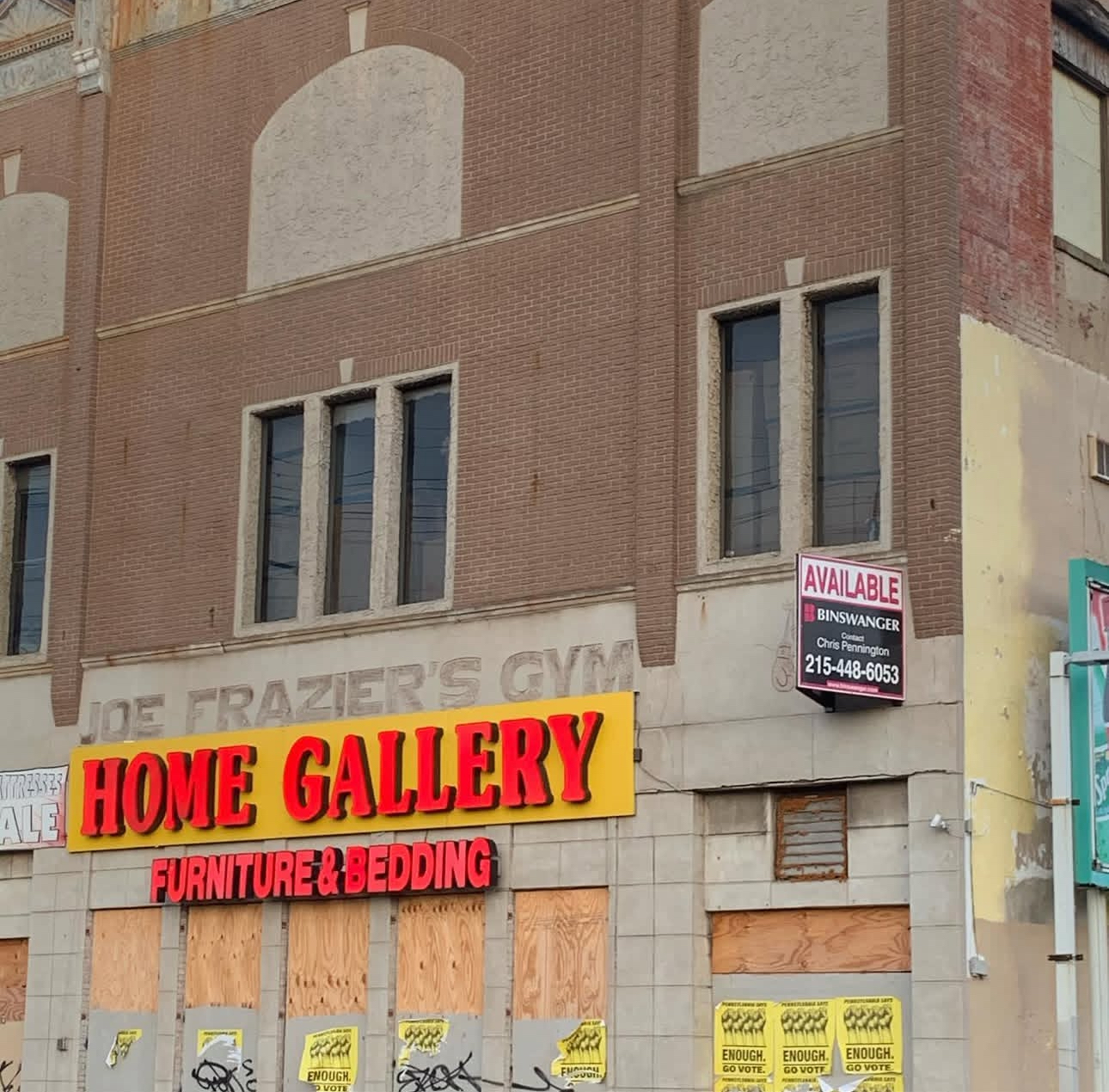
During the pandemic, I drove by Joe Frazier’s old gym. Seeing his faded name above a furniture store sign made me sad—even sadder to know he spent his later years living in a small apartment upstairs.

I thought about how great, how proud a champion he was. One half of some of boxing’s most epic bouts—Madison Square Garden to Manila. Blind in one eye, he made no excuses. He just shrugged, bobbed & weaved, & threw left hooks.

I thought about the prospects who trained there. The wars they fought. I pictured Smokin’ Joe leaning on the ropes, watching his young fighters spar: “That’s it. That’s it. Move them feet.”

Now, they say the city may tear it down, calling it “imminently dangerous.” To them, it is just falling brick & wire. Just a fading name above an old furniture store. To us, it was the cornerstone of the neighborhood. The keystone of the Philly fight game.

Song of the South

Song of the South
By M. Abduh

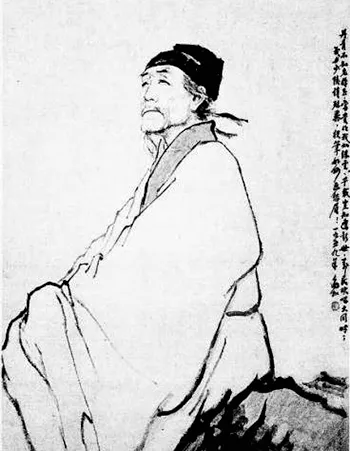
Some weeks ago, I came across One Hundred Poems from the Chinese, a volume of classic writings by Du Fu, Su Tung P’o, & others, translated & edited by Kenneth Rexroth. The collection is remarkable, but the first section—comprising thirty-five pieces by Du Fu—is most striking. The poems are imagistic, ironic, & introspective. Du Fu’s ability to describe a wine jug or the moon above his thatched roof is awe-inducing. These poems enthralled me, sending me in search of all things Du Fu.

Biographers declare him China’s greatest poet. Some even call him “China’s Shakespeare.” (I’m sure they mean it as a compliment.) However, Du Fu preceded Shakespeare by nearly eight centuries—writing around the time of Beowulf—making Shakespeare “England’s Du Fu.” & although he did not leave a traditional memoir, many of his poems are autobiographical. We find him visiting & drinking wine with Li Po, walking a wartorn countryside, & returning to his home & family after months in exile.

He wrote about the An Lushan rebellion & cold noodle soup, the horizon & a hairpin, expounding on the common and the cosmic with equal artistry. His work explores themes of isolation, loss, friendship, love, & despair while capturing the profound and simple wonders of the world:

Heartbroken, aging, alone, I sing
To myself. Ragged mist settles
In the spreading dusk. Snow skurries
In the coiling wind. The wineglass
Is spilled. The bottle is empty.
The fire has gone out in the stove.
Everywhere men speak in whispers.
I brood on the uselessness of letters.

Of course, I do not know a single character of Chinese. (That did not deter Pound, though.) So, I must acknowledge Du Fu’s translators, particularly Kenneth Rexroth. Of all the translations I consumed, his are the subtlest, the most vivid. 

I read Du Fu’s work, & I am transported—I hear the song of the South & the echo of chopping wood. I sit at a table littered with empty wine bottles & lobster shells. I lean against the temple wall in the bottomless night, as ten thousand organ pipes whistle & roar, as the war wagons rattle outside.

Writers on Fighters: Langston Hughes & Joe Louis

Writers on Fighters: Langston Hughes & Joe Louis
M. Abduh
31 August 2024

Langston Hughes wrote of the trials & triumphs of Black folks in poems such as “I, Too,” “The Weary Blues,” & “Mother to Son.” He penned essays, short stories, children’s books, novels, & plays on almost every aspect of our lives—from Harlem to Scottsboro, Alabama, from the blues to boxing. After witnessing Joe Louis’s loss to German heavyweight Max Schmeling, one of those great trials, Hughes wrote,

This was because “The Brown Bomber” was more than just a fighter to those who gathered on stoops, in barbershops, bars, & living rooms to listen to his fights on the radio. He was the pride of his people, as Hughes explained,

Louis would avenge this loss two years later, knocking out Schmeling in the opening round of their rematch. After the fight, Louis said, “If I ever do anything to disgrace my race, I hope to die.” Moved by such triumphs & testaments, Hughes wrote of Louis in a poem, “Joe has sense enough to know/He is a god/So many gods don’t know.”

Haiku of a Native Son

Haiku of a Native Son
M. Abduh

Leaving its nest
The sparrow sinks a second
Then opens its wings.

— Richard Wright, This Other World

When living abroad, Richard Wright’s book of haiku, This Other World, was a constant companion. The first thing I read in the morning, the last thing at night. Wright filled each three-line, seventeen-syllable poem with imagery & irony. His work deepened my love for the form. An ocean away from my home & family, these poems poured into me when I felt emptiest.

For Wright, creating haikus was a way to convalesce, to recuperate from a lingering illness, as his daughter Julia Wright stated,

He was never without his haiku binder under his arm. He wrote them everywhere, at all hours: in bed as he slowly recovered from a year-long, grueling battle against amebic dysentery; in cafes and restaurants where he counted syllables on napkins; in the country in a writing community owned by French friends, Le Moulin d’Ande.

Back at home among family & familiar faces, I still turn to these poems, in coffee shops & diners, by the river. Still read them often, to be filled time & again to bursting.